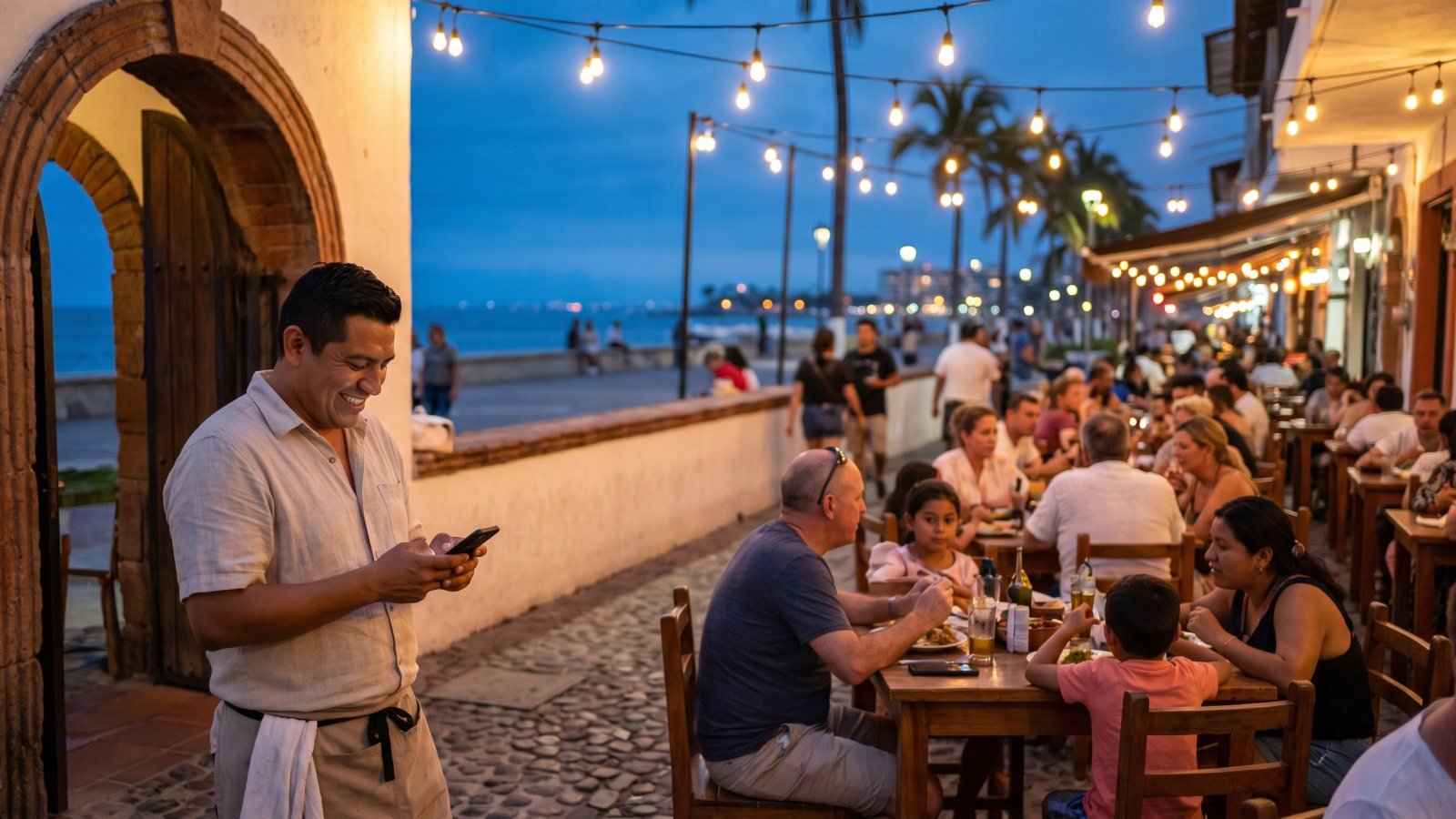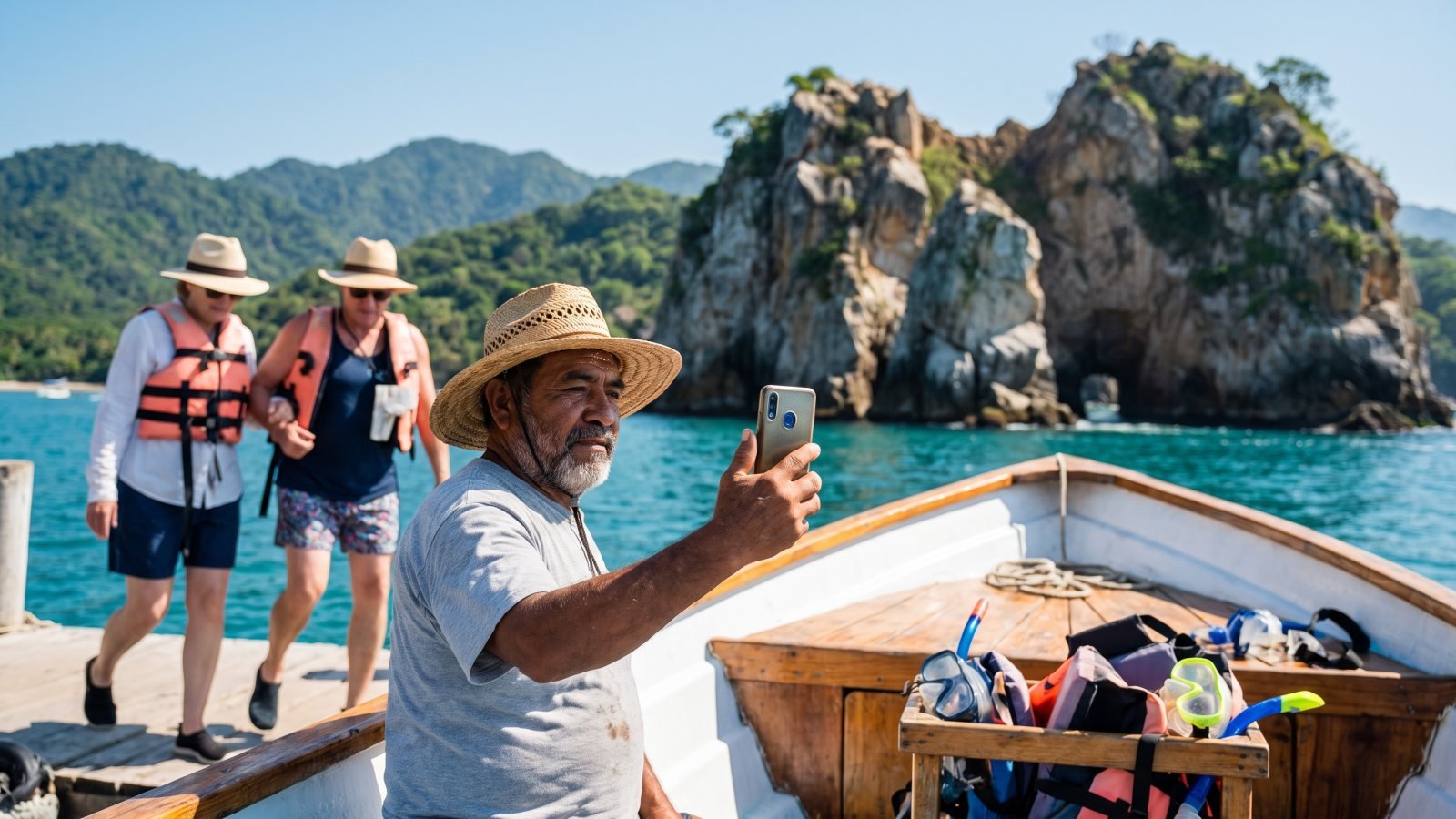
Puerto Vallarta does not have a steady year. It has a winter that pays for everything, a spring that depends on Easter, a summer that belongs to Mexican families and a rainy autumn when half the town catches its breath. Businesses that treat marketing as something you "do when it's slow" spend money in the wrong month every single year. This is the calendar we use with hotels, restaurants, tour companies, rental owners and clinics in Bahía de Banderas — what to start, when, and why the timing matters more here than almost anywhere else.
Two things before the month-by-month. First, the rule that drives the whole calendar: the decision is made weeks or months before the visit. A Canadian couple who lands in January booked in September and started researching in August. If your campaign starts when they land, it is a campaign for next year. Second, "high season" is not one audience. North American snowbirds, weekend visitors from Guadalajara, Easter families from Mexico City and summer domestic tourism are four different markets that search in different languages, on different platforms, at different times.
How the Puerto Vallarta year actually works
- Mid-November to Easter: the international high season. Hotels, villas and tours run at or near capacity; the market is US and Canadian, mostly English-speaking, mostly older than 45, many of them repeat visitors.
- Semana Santa and Pascua (the two weeks around Easter): the peak of national tourism. Families from Guadalajara, Mexico City, León and Monterrey. Spanish-speaking, price-sensitive, booking late, traveling in groups.
- July and August: summer domestic season. School holidays bring Mexican families and a smaller but growing number of international visitors who like the low prices and warm sea.
- September and October: the trough. Rain, heat, hurricane watch. Locals, expats who stayed, and the businesses that use these weeks to rebuild.
- Cross-cutting: whale season (December–March), the Puerto Vallarta International Gourmet Festival (November), Day of the Dead (early November), Pride (May), the fishing tournament (November), the November long weekend (Revolución) and the Guadalajara–Vallarta weekend traffic all year.
With that shape in mind, here is the year — starting in August, because that is when the season is actually won.
August: build the foundation before anyone is looking
August is quiet enough to do the work that cannot be done in December. This is the month for the unglamorous infrastructure.
- Fix the website. Speed, mobile, booking flow, WhatsApp button, updated prices and photos. If a redesign is needed, it has to start now to be live by October. Our web design team in Puerto Vallarta plans autumn launches for exactly this reason.
- Audit Google Business Profile. Hours, categories, photos from last season, services, the Q&A section. Reply to every review you did not answer.
- Write the content that ranks in winter. Google takes weeks to months to reward new pages. "Best time to visit Puerto Vallarta", "whale watching season", "what to pack in January", the neighborhood guides — publish them now so they are indexed by the time the searches spike.
- Shoot the video. August light is dramatic and the town is empty enough to film without crowds. A day with a video production crew in August feeds Reels through March.
September: aim at the people who are deciding right now
North American travelers researching winter trips are at their most active in September and early October. It is also when many expats and part-time residents book their return flights.
- Launch the "book direct for winter" push. Email to past guests and clients with a concrete reason to book now: early-season rates, first pick of dates, a free extra. This is the single highest-return email most Vallarta businesses send all year.
- Start Google Ads on winter intent. Terms like "Puerto Vallarta January", "Nuevo Vallarta condo rental winter", "private chef Puerto Vallarta" or "dental implants Puerto Vallarta" start climbing now. Modest budgets, exact-match, English, geo-targeted to the US and Canada. We run Google Ads and Meta Ads for Puerto Vallarta businesses on this cycle every year.
- Meta prospecting to the snowbird profile. Interests in Mexico travel, ages 45+, cold-weather states and provinces. Short video, English, one clear offer.
- Refresh the AI answer. More travelers now ask ChatGPT or Google's AI where to eat, stay or book a boat. If your pages do not state plainly what you do, where, for whom and at what range, you are not in the answer. Our SEO for AI service exists for this.
October: convert, and prepare November's events
- Retargeting on. Everyone who visited the site in September but did not book sees a reminder now. Cheap and effective.
- Day of the Dead and the Gourmet Festival content. Both fall in the first half of November; posts, reels and event pages need to be live by late October to appear in search.
- Restaurants and bars: lock the season menu and the photos. The winter clientele will see the menu on Google and Instagram before they see the door. Restaurant-specific timing is in our guide to restaurant marketing in Puerto Vallarta.
- Hotels and rentals: re-check every channel. Rates, minimum stays and photos on the platforms; parity with the direct site; calendar sync tested. A booking lost to a synced-calendar error in October is a December room that never sells.
November: the season starts — be visible, not busy
The Revolución long weekend, the fishing tournament, the Gourmet Festival and the first snowbird arrivals all land in November. Marketing shifts from planning to presence.
- Post from the ground. Real arrivals, real weather, real plates. Reels of the town filling up perform strongly with people still deciding on December and January. Our social media management plans lean into this from mid-November.
- Reviews campaign begins. Every guest, client or diner from now until April gets a review request. The reviews you earn between November and March carry you through the next summer.
- Thanksgiving and Black Friday. A gift-card or "book for February" offer around US Thanksgiving works for spas, restaurants, tours and rentals. Keep it simple and in English.
- Whale season announcements. Tour and charter operators: whale content starts in late November, not in January when everyone else posts it.
December: capture demand, protect reputation
- Christmas and New Year's are sold, not marketed. Anything you spend on prospecting in December is for late January and February. Shift budgets to retargeting, brand-term ads and "last-minute availability".
- Answer fast. Response time on WhatsApp, Instagram and Google messages is the marketing in December. If the team cannot keep up, a chatbot that answers the first questions and hands off to a human pays for itself in a week.
- Operations content. Holiday hours, special menus, closures, parking, dress code — put it on Google Business Profile and the site before the questions arrive.
January and February: the money months — measure and upsell
- Upsell the guest you already have. The visitor in a rental is a customer for a private chef, a boat day, a spa afternoon, a dental check-up. Cross-promotions with non-competing local businesses are cheap and effective; a concierge page or a WhatsApp referral works.
- Collect the assets. Photos, testimonials, video with real clients — with permission. Everything you will need for next August's campaign is walking through the door right now.
- Look at the numbers. Which source produced the bookings: Google organic, ads, Instagram, referrals, repeat email? Adjust March and next year's plan on what actually converted, not on what felt busy.
- Email for spring. The February email to this year's guests is the one that sells next winter. "Same dates next year" offers convert exceptionally well while the memory is fresh.
March: Easter is a different market — switch languages
Semana Santa moves between late March and mid-April. The audience is national, Spanish-speaking, booking two to four weeks out, often by phone or WhatsApp, and comparing prices hard.
- Spanish campaigns, geo-targeted to Guadalajara, Mexico City, León and Monterrey. Meta Ads work better than Google here; the trigger is the family group chat, not a search.
- Family and group offers. Packages, kids' pricing, group rates for tours and restaurants, multi-night discounts.
- Payment options that Mexican customers expect: transfer, Mercado Pago, cards without a foreign-currency charge. A site that only offers Stripe in USD loses this market.
- Do not let the English site go dark. Late-season snowbirds and early spring-breakers are still arriving; keep the English campaigns in maintenance mode.
April and May: the long tail, and Pride
- After Easter, shift to value messaging for the shoulder-season international visitor: quieter town, lower prices, warm sea.
- Puerto Vallarta Pride (late May) is a real season for hospitality in the Romantic Zone. Content and campaigns go out in April.
- Mother's Day (May 10) is a major date for Mexican customers — restaurants, spas, bakeries and florists should plan it like Christmas.
- Begin the summer domestic push in mid-May: school holidays start in early July, and families book in June.
June and July: summer is Mexican — and increasingly international
- Spanish-first content and offers for the domestic family market: all-inclusive style packages, kid-friendly tours, rainy-afternoon alternatives.
- Weekend traffic from Guadalajara is strong all summer; Thursday-to-Saturday ad schedules and "escápate el fin" style messaging work.
- International summer visitors are younger, more likely to find you on Instagram and TikTok, and more price-driven. Short video and a fast mobile site matter more than a long brochure.
- Rain is content. Storm timelapses, the green mountains, river tours, the empty beaches at sunrise — summer Vallarta is visually spectacular and under-marketed.
The businesses this calendar changes most
Hotels, villas and vacation rentals
The September email and the January "same dates next year" offer are the two highest-value actions of the year. If the site cannot take a booking, none of the timing matters; see our guide on direct bookings for a Puerto Vallarta rental and how PV Rents structures a rental brand around it.
Tours, charters and activities
Whale content in late November, Easter group pricing in March, summer family tours in June. The booking window is shortest of any category — often the day before — so the calendar is about being findable at the right moment. Details in our guide for tour and charter operators in Puerto Vallarta.
Restaurants and bars
Menu and photos ready by October, reviews campaign November–March, Mother's Day and Easter as Spanish-language peaks. A Google Business Profile that is current in November does more than any December ad.
Medical, dental and wellness
Medical tourists plan further ahead than vacationers. September–October English campaigns for January–March treatment windows, with pricing transparency and a bilingual site that answers the "is it safe / who is the doctor / how do I get there" questions. Our medical tourism web design work is built around this cycle.
Real estate
Buyers look in winter and sign in spring. Listings, video tours and neighborhood content must be live in October; open-house and event marketing runs January–March; Spanish-language campaigns for national buyers in summer.
A one-page version
- Aug: website, Google profile, content, video shoot.
- Sep: past-guest email, Google Ads on winter intent, Meta prospecting (EN), AI-ready pages.
- Oct: retargeting, November event content, menus and photos, channel check.
- Nov: post from the ground, reviews campaign, Thanksgiving offer, whale content.
- Dec: retargeting and brand terms only, fast replies, holiday info.
- Jan–Feb: upsell, collect assets, measure, "same dates next year" email.
- Mar: Spanish campaigns for Easter, family offers, national payment options.
- Apr–May: shoulder-season value, Pride, Mother's Day, start summer push.
- Jun–Jul: Spanish-first summer, Guadalajara weekends, short video for younger international visitors.
Frequently asked questions
When is the latest I can start marketing for high season?
October, realistically. Anything started in November competes for attention with businesses that have been building since August and will mostly produce results in late January. Starting in December is next year's campaign.
Should I stop advertising in the low season?
Reduce, do not stop. A small brand-term campaign and Google Business Profile activity keep you visible to the year-round expat and local market, and Google rewards consistency. The low season is also the cheapest time to build audiences for retargeting later.
How much of my budget should go to the Mexican market versus the international one?
It depends on the business. Tours, restaurants and mid-range hotels usually see 40–60% national customers across the year; luxury villas, medical tourism and long-term rentals are mostly international. Look at last year's actual customers before deciding — and treat the two as separate campaigns with separate languages, never one bilingual ad.
Do I need a bilingual website for this?
If you serve both markets, yes, and the two language versions should be planned as separate pages rather than a translation toggle. We explain why in our guide on bilingual websites for Puerto Vallarta businesses.
What is the most common mistake you see?
Spending the whole year's budget between December and February, when the customers who see the ads have already decided. The second most common: an English-only presence during Semana Santa and summer, when the town is full of Spanish-speaking customers who cannot find you.
Can Brewed run this calendar for us?
That is essentially what our digital marketing services in Puerto Vallarta are: the annual plan, executed month by month, with a report that says which month produced which bookings. Talk to us and we will tell you where your year should start.
The bottom line
Puerto Vallarta rewards businesses that are early and punishes the ones that are busy. The season is decided in September, the reputation is built between November and March, the Mexican market is won in Spanish in March and July, and August is when the next year quietly begins. Put the dates on the wall and the rest of the marketing gets a lot simpler.